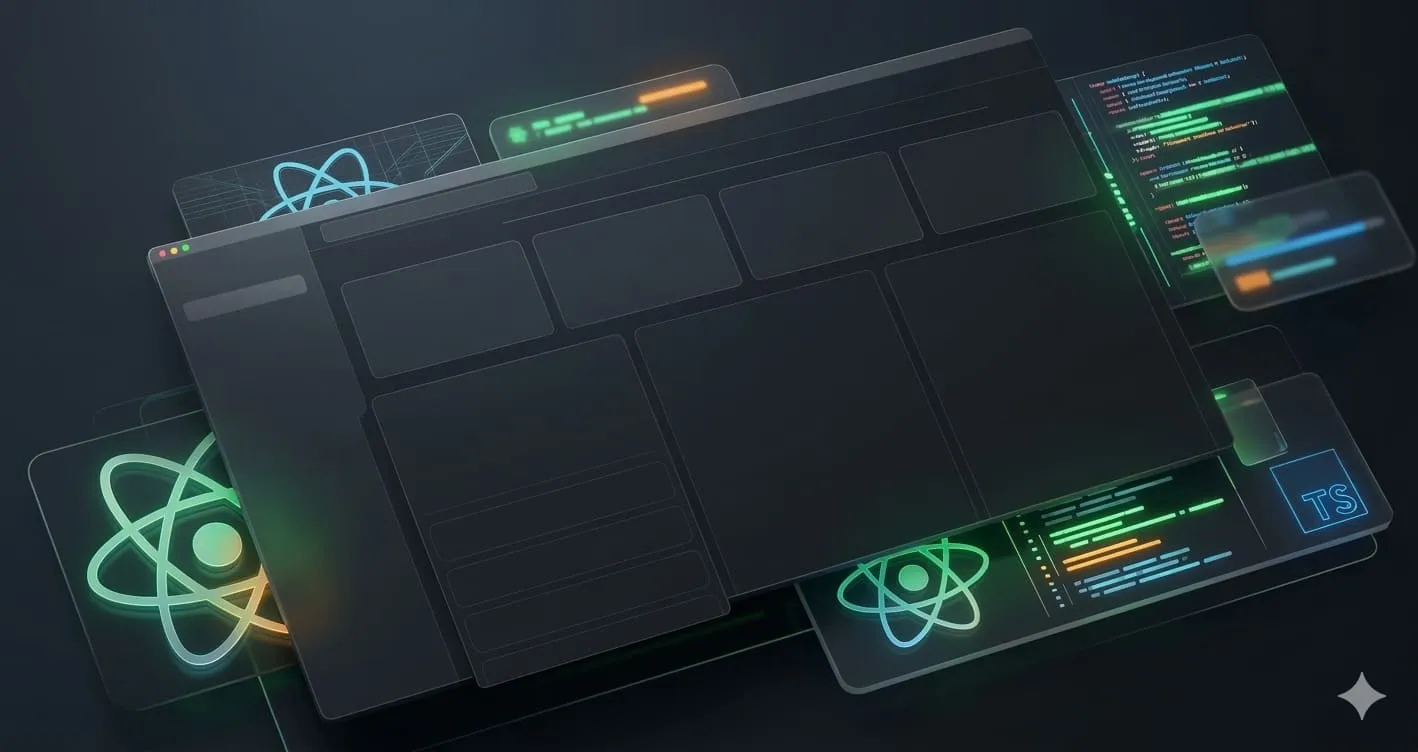
A desktop productivity application built with Electron, React, and TypeScript, designed to organize professional and personal life around four main pillars: Areas, Goals, Habits, and Calendar.
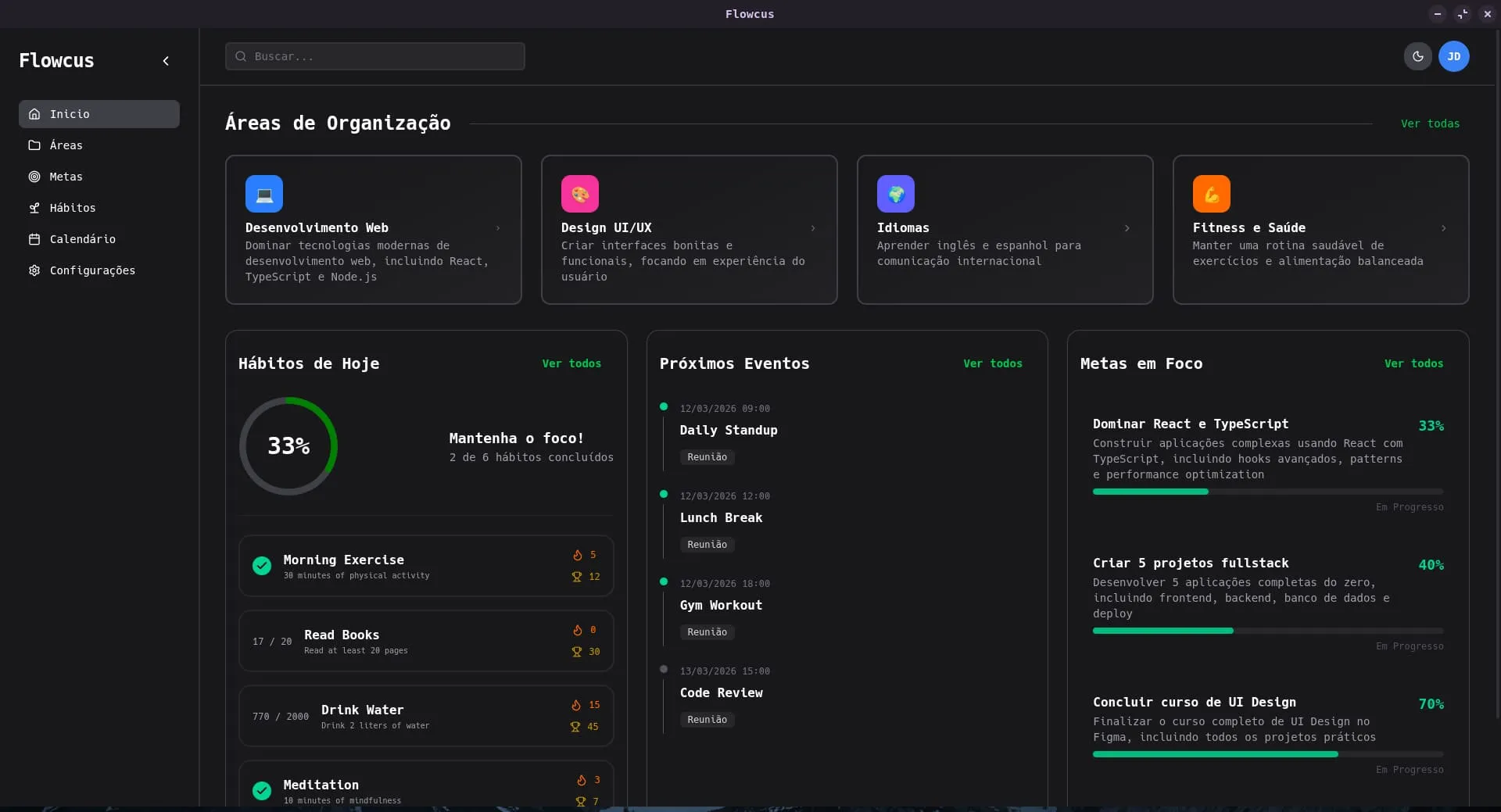 The Flowcus dashboard brings areas, goals, habits, and calendar events together.
Why I Built This Project
I have always enjoyed productivity tools, but many existing products felt either too complex or too limited for everyday use. I created Flowcus to find a balance: complete enough to organize different parts of life, yet simple enough to use consistently.
The idea came from a personal need. I wanted one place for habit tracking, goal setting, calendar planning, and writing study notes. Since I could not find a tool that combined these workflows in the way I wanted, I decided to build my own.
Another important goal was a truly offline-first experience that would work without an internet connection. I also wanted it to behave like a native desktop application with strong performance and a fluid interface. Electron made it possible to build that experience with React and TypeScript while retaining a productive web-development workflow.
Project Architecture
The architecture is designed for scalability and maintainability:
flowcus/
├── src/
│   ├── main/                    # Electron main process
│   │   ├── handles/             # IPC handlers
│   │   │   ├── areas/           # Area CRUD
│   │   │   ├── goals/           # Goals and tasks
│   │   │   ├── habits/          # Habits and daily logs
│   │   │   ├── calendar-events/ # Calendar events
│   │   │   ├── blocks/          # Content blocks
│   │   │   └── profile/         # Profile management
│   │   └── db/                  # SQLite database
│   │       ├── database.ts      # Drizzle configuration
│   │       ├── schema.ts        # Table definitions
│   │       └── seed/            # Initial data
│   ├── preload/                 # Secure bridge scripts
│   └── renderer/                # React UI process
│       └── src/
│           ├── components/      # Reusable components
│           ├── contexts/        # Global state
│           ├── hooks/           # Custom hooks
│           └── pages/           # Application routes
Architectural Decisions
| Area | Decision | Reason |
|---|---|---|
| Database | SQLite + Drizzle | Fast offline persistence with no setup |
| Local state | React Context | Simple state management without Redux |
| Styling | Tailwind CSS 4 | Fast development and consistent utilities |
| Components | Radix UI + shadcn/ui | Accessible primitives and customization |
| Build | Electron-Vite | Fast HMR and a strong development experience |
Technologies and Tools
Core Stack
- Electron 38 – Cross-platform desktop framework.
- React 19 – Component-based user interface.
- TypeScript 5.9 – End-to-end static typing.
- Tailwind CSS 4 – Utility-first styling.
Database
- Drizzle ORM – Lightweight, high-performance ORM.
- Better-SQLite3 – SQLite driver compiled for Node.js.
- SQLite – Zero-configuration local database.
UI and Editing
- Radix UI, shadcn/ui, and Lucide React for accessible interface components.
- Framer Motion, Tailwind Merge, and CVA for motion and component variants.
- TipTap, BlockNote, and ProseMirror for extensible rich-text editing.
- Recharts, React Day Picker, date-fns, and Luxon for data and calendar views.
- Electron-Vite and Electron Builder for development and multi-platform packaging.
Features
Areas
Organize projects and areas of responsibility with a flexible block system.
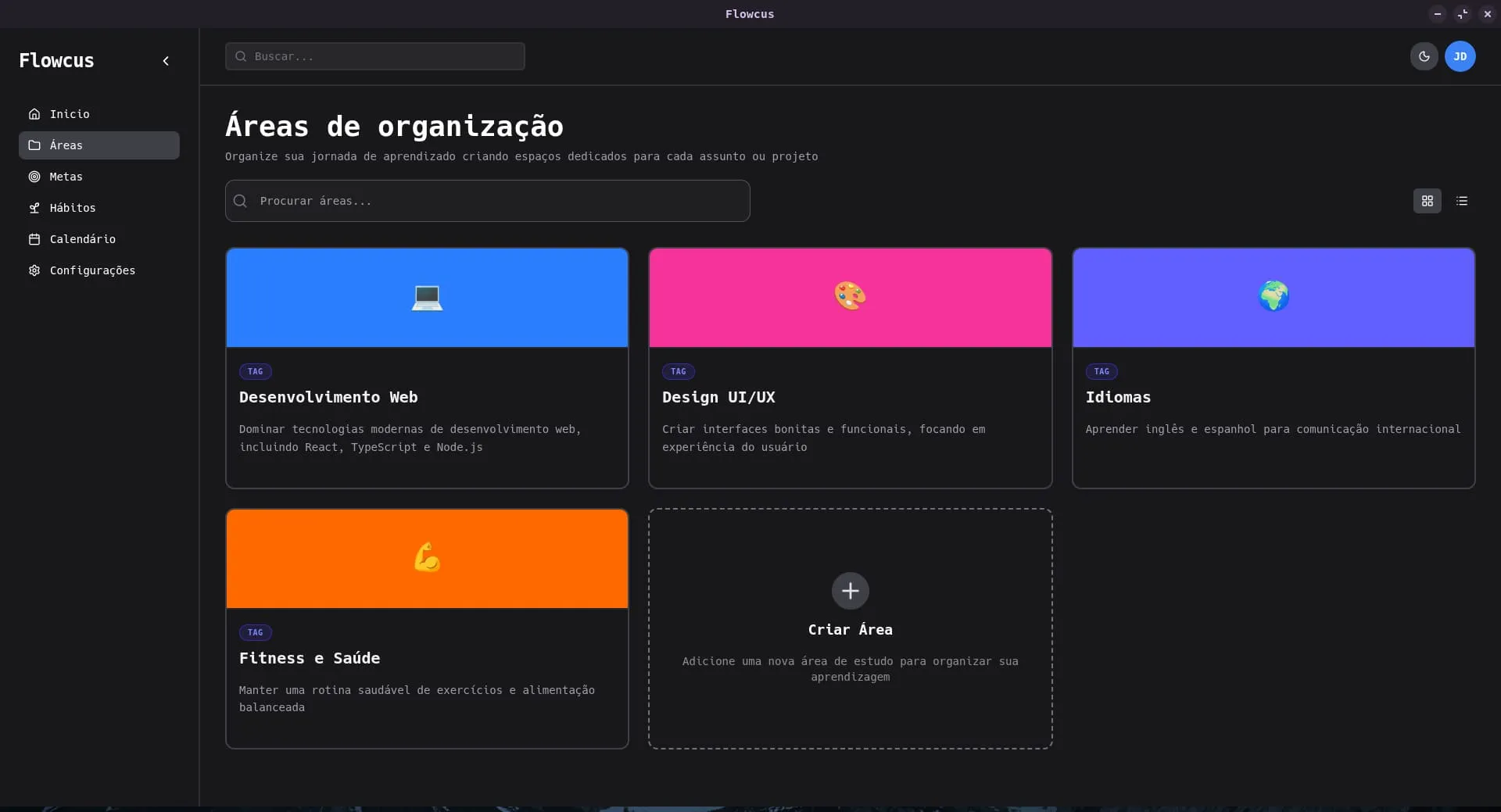 Flowcus area grid with color-coded cards.
- Complete CRUD and manual reordering.
- Grid and list views.
- Drag-and-drop organization.
- Search by name or description.
- Notion-style rich block editor.
- Text, lists, code, and image content.
Goals
Define objectives and track progress in detail.
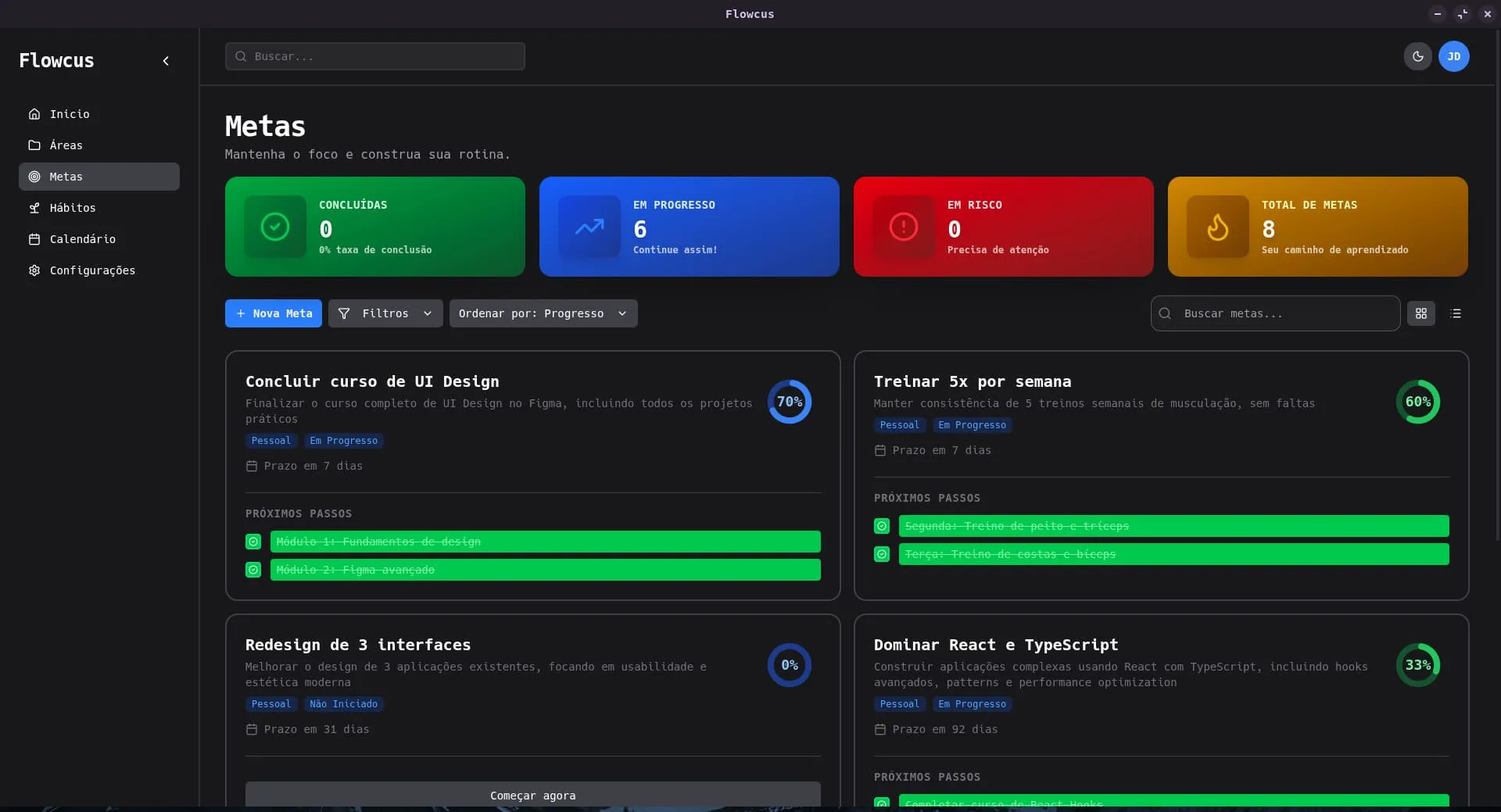 Goal card with progress and related tasks.
- Goals contain individual tasks.
- Progress is calculated from completed tasks.
- Personal, work, health, and custom categories.
- High, medium, and low priorities.
- In-progress, completed, paused, and canceled states.
- Sorting by date, priority, or progress.
Habits
Build positive routines with detailed tracking.
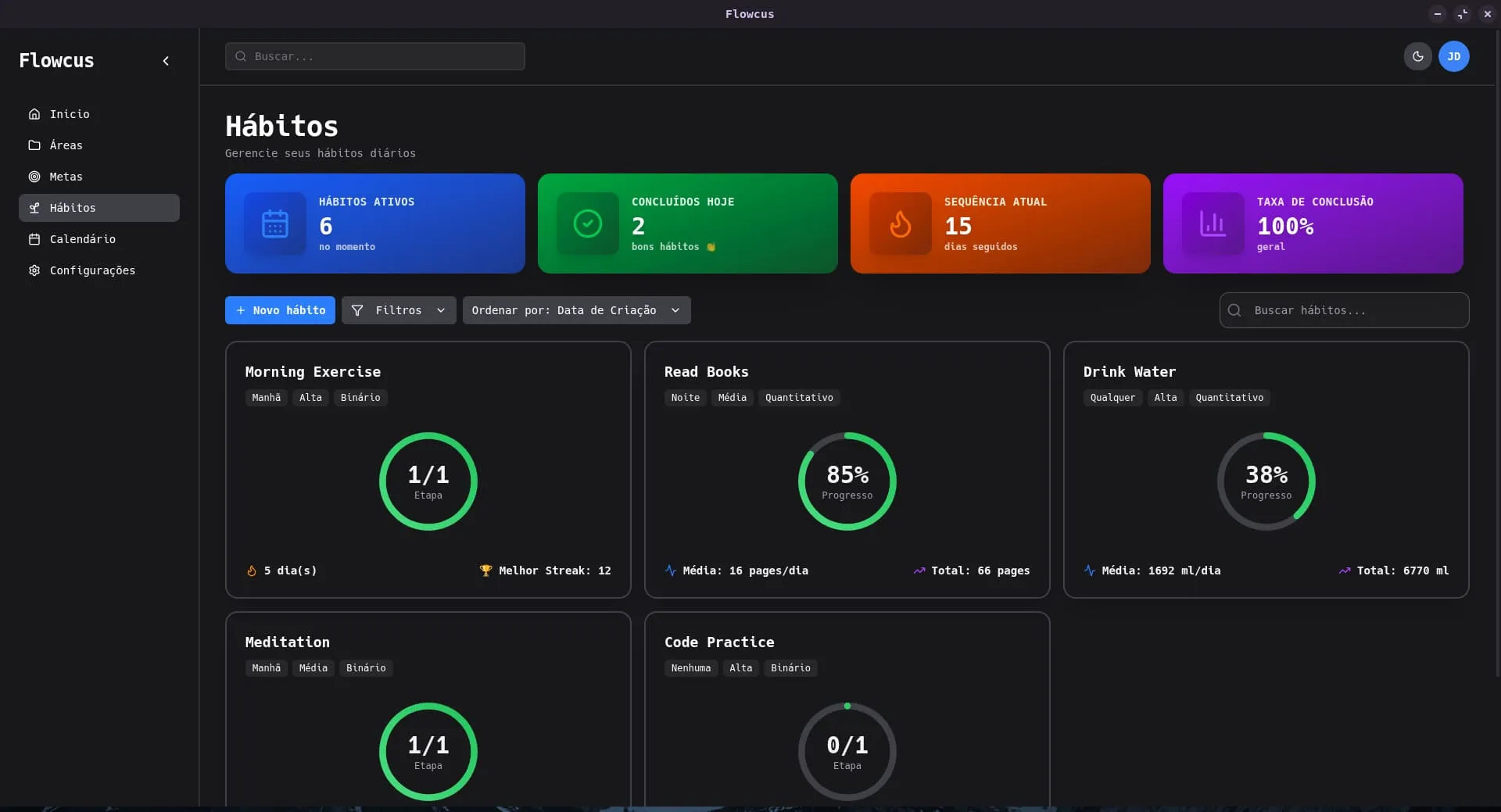 Habit dashboard with statistics and a heatmap.
- Daily completion logging.
- Consecutive-day streak tracking.
- Completion rate, best streak, monthly history, and annual heatmap.
- Morning, evening, weekly, and custom habit types.
- Filters by type, priority, and status.
Calendar
Manage appointments through multiple views.
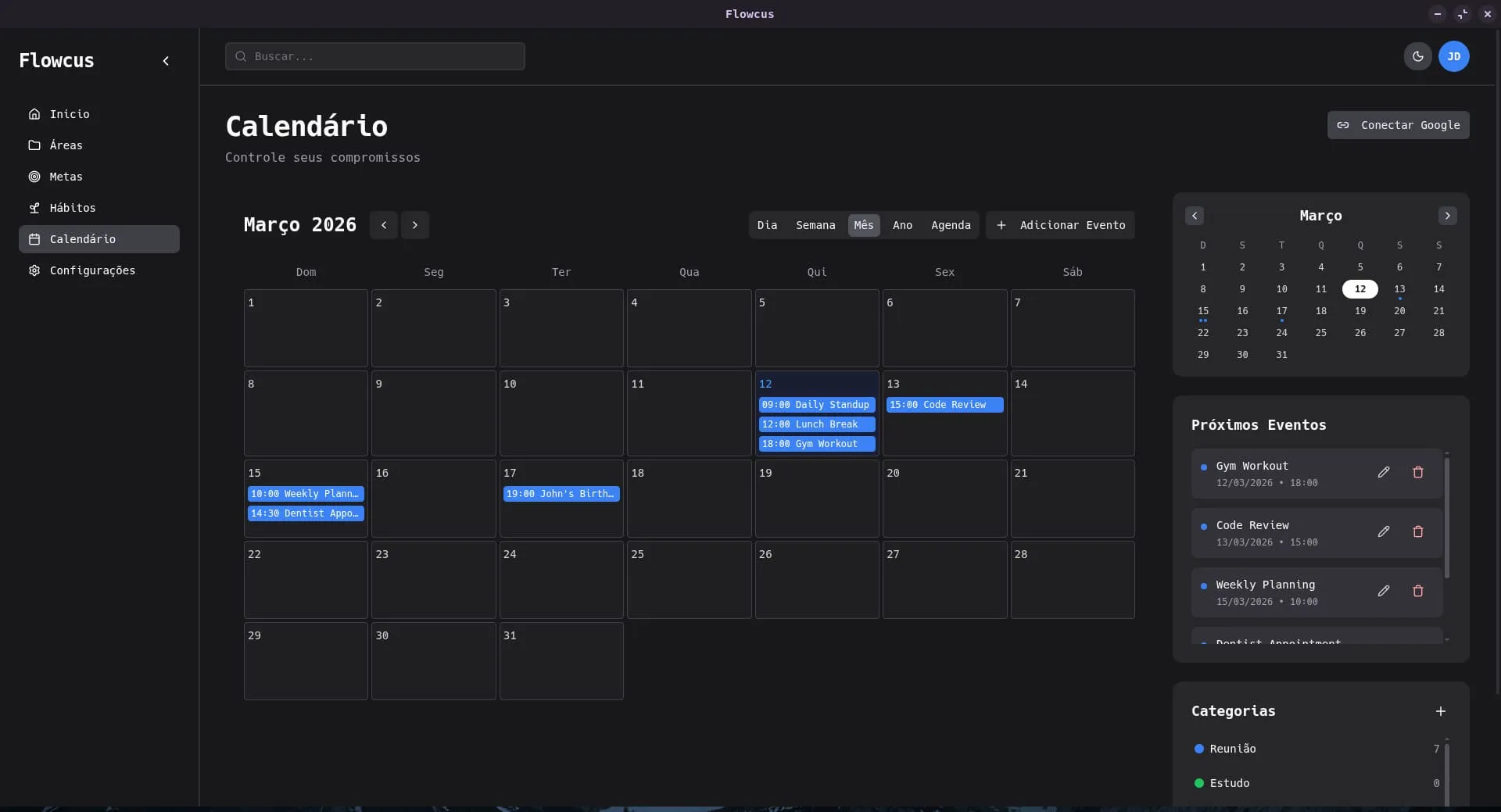 Monthly calendar with color-coded events.
- Day, week, month, year, and agenda views.
- Contextual creation from any date or time slot.
- Custom colors for event categories.
- Independent mini-calendar navigation.
- Full support for all-day events.
- Recurring event patterns under development.
General Capabilities
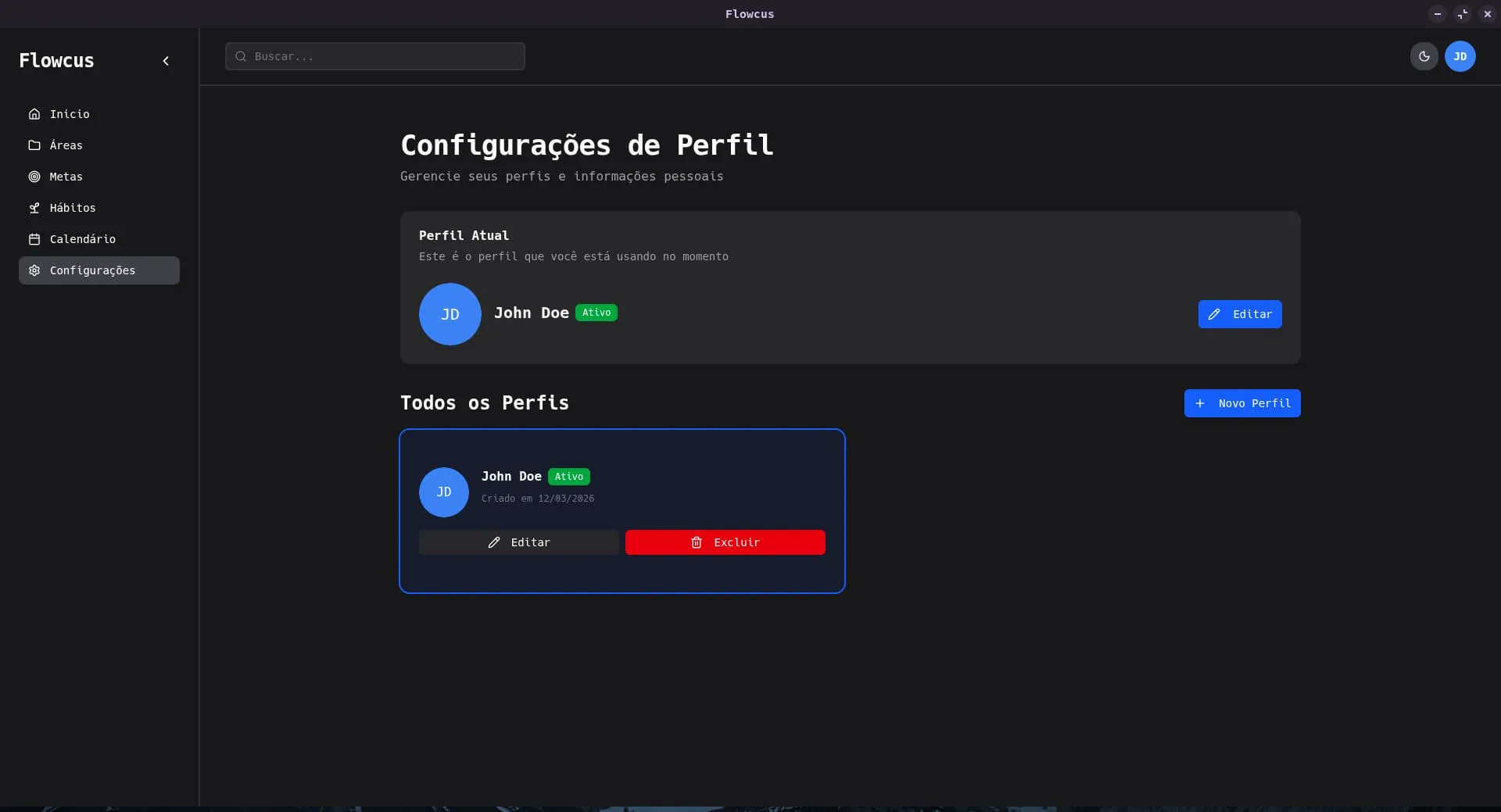 Theme and profile settings in Flowcus.
- Automatic and manual dark mode.
- Multiple local profiles.
- Global search.
- Responsive tablet and mobile layouts.
- Keyboard shortcuts.
- Offline local persistence.
Technical Challenges
1. State Synchronization
Problem: Keeping data consistent between Electron’s main process and renderer.
Solution: Each domain has dedicated IPC handlers. The renderer calls ipcRenderer.invoke(), and the main process performs database operations and returns typed results.
ipcMain.handle("habits:getAll", async (_, profileId: string) => {
  return db.select().from(habits).where(eq(habits.profileId, profileId));
});
2. Performance with Large Data Sets
Large habit and event lists were optimized with React.memo, virtualization where appropriate, and filtered Drizzle queries that move work into the database.
3. A Stable Block Editor
TipTap and BlockNote required Electron-specific configuration. I implemented reliable serialization, automatic persistence, and support for multiple block types.
4. Local Database Packaging
better-sqlite3 is compiled for Electron, while versioned schemas, migrations, and seed data keep installations consistent.
What I Learned
Technical Skills
- Electron processes, IPC, preload scripts, and
contextBridge. - Drizzle queries, migrations, and schema design.
- React 19, Tailwind CSS 4, electron-vite, and electron-builder.
Product Skills
- Feature prioritization and scope management.
- Long-term architectural decisions.
- Accessible feedback and thoughtful UX.
- Clear documentation for contributors.
Available Scripts
# Development
npm run dev
npm run start

# Build and packaging
npm run build
npm run dist
npm run build:win
npm run build:mac
npm run build:linux

# Database
npm run db:studio
npm run db:push
npm run db:generate
npm run db:migrate
npm run db:seed
npm run db:reset

# Quality
npm run lint
npm run format
npm run typecheck
Next Steps
- Cloud backup and synchronization across devices.
- Google Calendar integration.
- Cross-feature tags and labels.
- PDF, Markdown, and JSON exports.
- Plugin and extension system.
- Progressive web version.
Why This Project Matters
Flowcus demonstrates my ability to build and package complete desktop software, use a modern React and TypeScript stack, design thoughtful offline experiences, solve IPC and persistence challenges, and document a growing codebase. It is more than a task manager—it is a practical exploration of powerful native-feeling tools that work without external dependencies.
Interested in the project? Get in touch or contribute on GitHub.